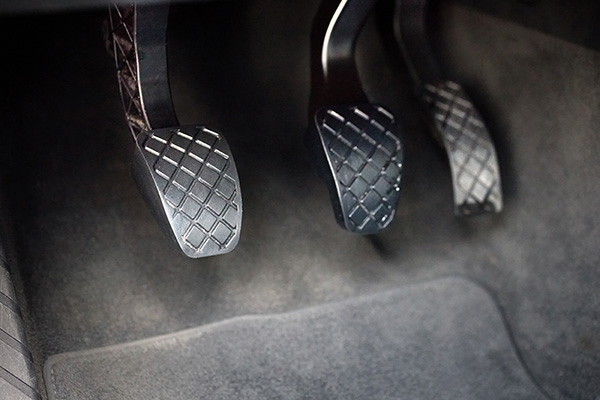
A clutch pedal that suddenly stays on the floor feels scary, and it can leave you wondering if the car will move again or if you are about to be stranded. Sometimes you can hook the pedal with your toe and pull it back up, other times it refuses to come back at all. When that happens, you are usually dealing with a hydraulic problem, not the clutch disc itself, and it is something that should be checked sooner rather than later.
What It Feels Like When the Clutch Pedal Stays Down
Many drivers first notice the pedal getting “mushy” before it finally sticks. The pedal may feel softer than usual, sink lower with less effort, or take longer to return after you shift. Gear changes might start to feel vague or slightly crunchy, especially going into first or reverse. You may also see the pedal stay on the floor after a hard stop or a quick downshift.
Once the pedal stays fully down, shifting becomes difficult or impossible. You might hear grinding when trying to select a gear, or you might not be able to get into gear at all. Sometimes the pedal will come back after the car sits for a few minutes, which can trick people into thinking the problem went away. In reality, that “on and off” behavior usually means the hydraulic system is right on the edge of failing completely.
How a Hydraulic Clutch System Is Supposed to Work
On a hydraulic clutch system, the pedal pushes a rod into the clutch master cylinder. That master cylinder pressurizes brake-type fluid and sends it through a line to the slave cylinder. The slave cylinder then moves the clutch fork or release bearing, which separates the clutch surfaces so you can change gears. Every part of that chain has to work smoothly for the pedal to come back up on its own.
If there is enough pressure and no leaks, the clutch feels consistent from day to day. The pedal height stays the same, the engagement point is predictable, and you can feather the clutch without drama. When seals wear out, fluid leaks, or air sneaks into the system, pressure drops. That is when the pedal starts to feel soft, inconsistent, or slow to return.
Common Reasons a Hydraulic Clutch Pedal Sticks to the Floor
One of the most common causes is a worn master cylinder with internal seal failure. The fluid can bypass the seals instead of building pressure, which lets the pedal sink to the floor and stay there. A failing slave cylinder can cause similar symptoms and may also leak fluid externally near the transmission. We often see dark, wet spots around the bellhousing or on the ground underneath when that happens.
Low fluid in the reservoir is another big one. A slow leak from a line, hose, or cylinder can drop the fluid level over time, and the pedal may start sticking when air gets pulled into the system. On some cars, the clutch shares a reservoir with the brakes, so a leak can affect both systems. Collapsed or damaged rubber hoses can also cause the pedal to act strangely, because fluid flows one way but cannot return properly.
Owner Mistakes That Make Clutch Problems Worse
A stuck pedal is frustrating, and it is tempting to just yank it back up and keep driving. Forcing the pedal repeatedly can stress already weak components and may cause a complete failure at the worst possible time. Pumping the pedal again and again might temporarily bring it back, but that is usually masking air or fluid loss that needs attention.
Ignoring a low fluid warning or topping off without finding the leak is another mistake. Fluid does not disappear on its own, so if you keep adding more, there is a leak somewhere. Some drivers also keep driving while gears are grinding, which can damage the transmission synchronizers. When we inspect cars that have been driven like that, the repair list tends to grow quickly.
What You Can Safely Check Before a Shop Visit
There are a few basic checks you can do without getting too deep into the car, as long as you use caution and keep safety first:
- With the engine off, press the clutch pedal slowly and see if it feels spongy, rough, or squeaky.
- Look at the fluid reservoir (often near the brake master cylinder) for low level or unusually dark fluid.
- Check under the car and around the firewall and transmission area for fresh wet spots or oily streaks.
- Make sure floor mats are not bunched up behind the pedal, which can occasionally interfere with pedal return.
These quick checks can give you clues to share with a technician. They do not replace a proper inspection, but they can help narrow down whether you are dealing with a clear leak, worn components, or a mix of both.
Why Professional Hydraulic Clutch Repair Saves Money
Hydraulic clutch systems look simple on the surface, but getting them working correctly again usually requires more than just topping off fluid. A proper repair may involve replacing the master cylinder, slave cylinder, or lines, then bleeding the system to remove air and restore consistent pressure. Our technicians may also inspect the clutch fork, release bearing, and pedal linkage to make sure there is no mechanical binding.
When we road test a car with clutch issues, we pay attention to where the pedal engages, how cleanly the gears shift, and whether the bite point is consistent. That helps confirm the fix instead of just swapping parts and hoping for the best. A careful repair today can prevent you from being stranded later, and it can protect your transmission from long-term damage caused by incomplete clutch release.
Get Hydraulic Clutch Repair in New Orleans, LA with NOLA Automotive Repairs
If your clutch pedal is sticking to the floor, feeling spongy, or making every shift a guessing game, this is the right time to get it checked by a professional. We can inspect the hydraulic clutch system, track down leaks or worn components, and restore the clean, predictable pedal feel. That makes every drive easier and helps protect the rest of the drivetrain.
Schedule hydraulic clutch repair with NOLA Automotive Repairs in New Orleans, LA, and we will help keep your car shifting smoothly again.