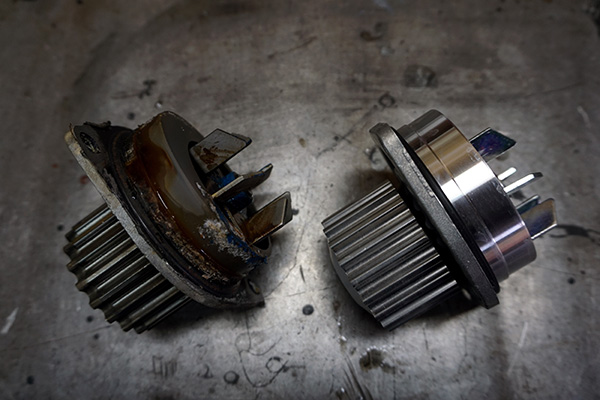
A water pump failure rarely starts with a big puddle and steam pouring out from under the hood. More often, it starts with small changes you can easily chalk up to weather, traffic, or an aging car. The problem is, once a pump truly lets go, the temperature can climb quickly, and you do not get much time to react.
If you learn the early signals and what they usually mean, you can catch a weakening water pump before it turns into an overheating event. The clues are there, but they just show up in quiet, easy-to-miss ways.
What The Water Pump Does And Why It Matters
The water pump circulates coolant through the engine and radiator. That flow is what carries heat away from the engine, keeps temperatures stable, and allows the heater to work properly. When the pump is weak, coolant may not move fast enough under load, which can cause heat to build in certain conditions, even if the gauge looks fine most of the time.
Some pumps are driven by the serpentine belt, while others are driven by the timing belt or are electric on certain models. The basics are the same, but the warning signs can vary a bit depending on the design and where the pump sits.
Early Clues That Often Point To Water Pump Trouble
- A failing pump usually gives hints before it fails completely. The trick is noticing patterns instead of brushing them off.
- A coolant level that slowly drops without a clear external leak, especially if you have to top off more often than you used to
- A sweet smell after driving, even if you do not see a puddle right away
- A light grinding or chirping sound near the front of the engine that changes with RPM
- Heater output that is inconsistent at idle, then improves when you are moving
- A temperature gauge that creeps higher in stop-and-go traffic, then drops again once you get airflow
These are not guaranteed water pump symptoms, but they are common enough that they deserve attention.
Coolant Leaks Around The Pump Area
Many water pumps have a weep hole, which is designed to let coolant escape if the internal seal starts to fail. When that happens, you may see dampness, crusty residue, or streaking near the pump. Sometimes the leak is slow and only shows up after a drive when the system is hot and pressurized.
Because the pump is often tucked behind other components, the leak does not always drip straight down where you can see it. Coolant can land on covers or splash shields and then blow backward while driving, which makes the source harder to find without an inspection.
Noise Changes That Can Signal Bearing Wear
Water pumps use bearings, and when those bearings start to wear, they can make a range of sounds. Early on, it might be a faint growl or a light chirp that comes and goes. As wear increases, the sound often becomes more consistent and tends to track engine speed.
It is easy to confuse pump noise with belt or pulley noise, especially because the sounds come from the same general area. That is why we listen for the exact tone, check the belt condition, and inspect nearby pulleys. The goal is to confirm the source before replacing anything.
Temperature Behavior That Suggests Weak Coolant Circulation
Overheating is the obvious sign, but early water pump problems often show up as inconsistent temperature control. You might notice the gauge runs slightly higher than normal on warmer days, or the temperature rises when you sit in traffic and does not recover quickly.
One pattern we pay close attention to is a heater that goes cool at idle. The heater relies on hot coolant flowing through the heater core. If the flow is weak, the heater may blow cooler air when you are stopped, then warm up again once the RPM increases and the pump spins faster. That pattern can also be caused by low coolant or air pockets, so it is a clue, not a final diagnosis.
Owner Mistakes That Make Overheating More Likely
A common mistake is repeatedly topping off coolant without finding the reason it is dropping. Low coolant can create air pockets that reduce circulation, which makes the pump work harder and raises the temperature faster. Another mistake is using plain water for repeated top-offs, which reduces corrosion protection and can shorten the life of cooling system parts.
Mixing coolant types can also cause issues. Some mixtures can create buildup that restricts flow, and restricted flow can mimic a weak pump. If you are not sure what coolant is in the system, it is better to have it checked than to guess.
What A Proper Water Pump Check Includes
A good inspection focuses on confirming the leak or confirming the flow problem. That usually starts with checking coolant level and condition, inspecting the pump area for residue, and pressure-testing the system to make slow leaks show themselves. We also check belt condition and tension on belt-driven pumps, since slipping belts can reduce pump speed and create temperature issues that look like pump failure.
If the vehicle has a history of overheating, we look at the whole cooling picture. Thermostat behavior, radiator condition, fan operation, and pressure control all affect temperature. The goal is to avoid replacing a pump when the real issue is a different restriction or a pressure problem.
Get Water Pump Service in New Orleans, LA with NOLA Automotive Repairs
We can inspect your cooling system, pinpoint whether the water pump is leaking or losing efficiency, and catch problems before the engine overheats. We’ll also check related components like belts, hoses, thermostat behavior, and fan operation so the repair addresses the real cause.
Call NOLA Automotive Repairs in New Orleans, LA, to schedule a cooling system inspection and get ahead of water pump trouble early.